
FAA Certification and Approval Services
Navigate complex FAA requirements from concept to operational approval.
Section 44807 Exemption
Operating a commercial UAS that weighs more than 55 pounds requires a specialized approval from the FAA known as a Section 44807 Grant of Exemption. Obtaining that approval requires a comprehensive safety case demonstrating that the proposed operation can be conducted safely and that the requested relief provides an equivalent level of safety.
Airspace Consulting specializes in developing professional, FAA-compliant documentation based on decades of aviation experience. We take a systematic approach to operational safety that streamlines the FAA approval process.
Our documentation is developed specifically for the FAA exemption process and defines operational responsibilities, demonstrates risk mitigation, and presents a comprehensive safety case. Airspace Consulting will be your trusted guide through the FAA exemption process—from concept to operational approval.

DJI FlyCart 100
MTOW: 375 pounds
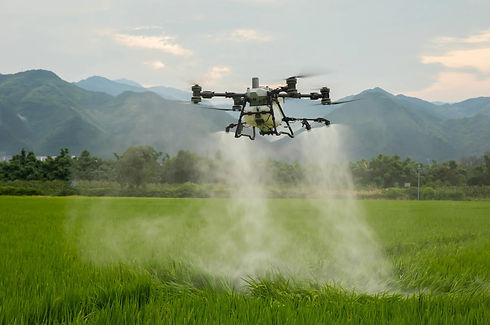
DJI Agras T100
MTOW: 386 pounds
Part 137 Agricultural Aircraft
Conducting agricultural aircraft operations from an unmanned aircraft to dispense pesticides, fertilizers, seeds, or other agricultural products requires an Agricultural Aircraft Operator Certificate (AAOC) under 14 CFR Part 137. Agricultural UAS operations require an FAA exemption from certain federal regulations. For UAS weighing 55 pounds or more, the exemption process may include relief under 49 U.S.C. §44807. Our experience preparing FAA exemption documentation enables us to develop a certification package that demonstrates operational readiness and a systematic approach to safety. Once the exemption process is complete and an exemption number has been issued, FAA Form 8710-3 must be submitted to obtain the Agricultural Aircraft Operator Certificate (AAOC).
While the FAA regulates aviation operations and airspace, state authorities regulate pesticides, chemical use, and many aspects of agricultural application practices. Operators may also need a state commercial pesticide applicator license and applicable aerial or unmanned-application credentials, depending on the state in which the operation is conducted. Additional state requirements may include chemical drift liability insurance, agricultural aviation licensing, or other state-specific credentials.
Whether transitioning from conventional aerial application to unmanned aircraft or establishing a new agricultural drone operation, Airspace Consulting provides practical guidance and professional documentation to help clients successfully navigate the FAA exemption and Part 137 certification processes.
Special Airworthiness Certificate
Developing and testing advanced unmanned aircraft systems requires a distinct FAA regulatory path. If you are a manufacturer or developer pushing the boundaries of UAS technology, a Special Airworthiness Certificate–Experimental Category (SAC-EC) from the FAA may provide the appropriate pathway for authorized flight operations. This certificate may authorize flight operations for research and development, crew training, market surveys, and exhibition flights, depending on the approved purpose and operating limitations.
The certification process requires appropriate technical and operational documentation, including flight procedures, risk management, and maintenance and continued-airworthiness provisions appropriate to the aircraft and proposed operation. Airspace Consulting has experience creating an operational framework that demonstrates sound flight procedures, risk management, maintenance control, and continued airworthiness to support successful certification.
Whether supporting early flight testing of a new aircraft design or preparing for future operational approvals, Airspace Consulting provides practical guidance and professional documentation to help clients successfully navigate the FAA Special Airworthiness Certificate process.
Have questions about FAA requirements for specialized UAS operations? Visit our FAQ for answers to frequently asked questions.

Leigh Aerosystems E-100
MTOW: 330 pounds
Need help navigating an FAA approval for an advanced UAS operation?
Contact Airspace Consulting to discuss your proposed operation.